- The Human Guide
- Posts
- AI Escaped the Screen and Everything Else Is Breaking
AI Escaped the Screen and Everything Else Is Breaking
Plus: Wearable AI’s second coming, and why enterprise AI still isn’t working

Felix Khakame
January 10, 2026
Hello, Human Guide
Today, we will talk about these THREE stories:
How CES 2026 confirmed AI is moving into physical space
Why wearable AI is back and Big Tech is betting hard
Why most companies still can’t make AI pay off
CES 2026 Proved AI Has Left the Screen
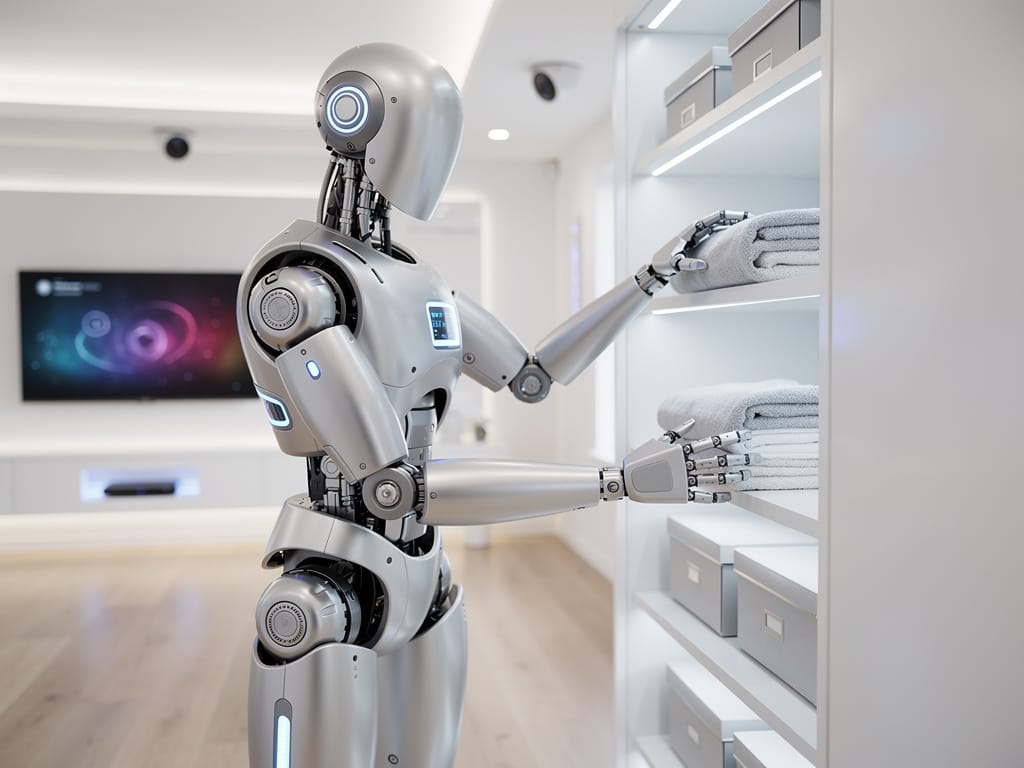
AI finally stood up and walked onto the showroom floor.
At CES 2026, more than 41% of keynote product demos involved AI embedded in physical devices, from household robots to adaptive laptops, according to coverage compiled by The Verge and CTA briefings. Robotics vendors alone took up 28% of the exhibition hall floor space, up from 19% in 2024, while at least 63 new consumer products shipped with on-device AI chips announced for release this year.
What stands out is how little any of this felt experimental. This is less about flashy demos and more about AI quietly becoming infrastructure—motors turning, doors unlocking, machines reacting while you stand there watching under harsh expo lights at 10 a.m.
The implication is uncomfortable: once AI leaves the browser, failure stops being abstract. A hallucination in a robot is not a typo, it’s a broken plate, a locked door, or worse.
If AI now acts in the physical world, the real question is how much error tolerance society is actually willing to live with.
Wearable AI Is the Next Platform War

Wearable AI is back, and this time the money stayed.
At CES 2026, at least 17 wearable AI devices were unveiled across glasses, pins, rings, and earbuds, with Bloomberg reporting over $2.14 billion in combined venture and corporate funding behind this category since mid-2024. IDC estimates wearable AI shipments will reach 38.6 million units in 2026, up from 14.2 million in 2024, driven largely by Big Tech distribution deals.
What bothers me is how familiar this feels. The pitch hasn’t changed “hands-free,” “ambient,” “always there” but the leverage has. These aren’t scrappy startups anymore; they’re plugged into app stores, cloud platforms, and advertising pipes that already know who you are.
This turns wearables into a control layer, not just a gadget. Whoever owns the interface owns the defaults, the prompts, and the data exhaust humming quietly while you walk to work.
If the next computing platform sits on your face or chest all day, the real question is who gets to decide what it whispers first.
Enterprise AI Is Still Not Paying Off

Three years in, the returns still haven’t arrived.
An MIT Sloan survey published in late 2025 found that 94% of enterprises reported “no material productivity gains” from AI deployments, despite global enterprise AI spending hitting $196.3 billion last year, according to IDC. Deloitte reports companies now run an average of 7.4 overlapping AI tools per department, most stuck in pilot or partial rollout.
What struck me is how quiet this disappointment has become. Executives no longer hype breakthroughs; they talk about “integration,” “change management,” and “workflow friction” while staring at dashboards late at night, wondering why usage keeps stalling.
The implication is brutal but simple. AI doesn’t fail because it’s weak, it fails because organizations are. Buying models is easy. Changing incentives, jobs, and trust is not.
If companies keep buying intelligence without redesigning work, the real question is how long budgets survive before patience runs out.